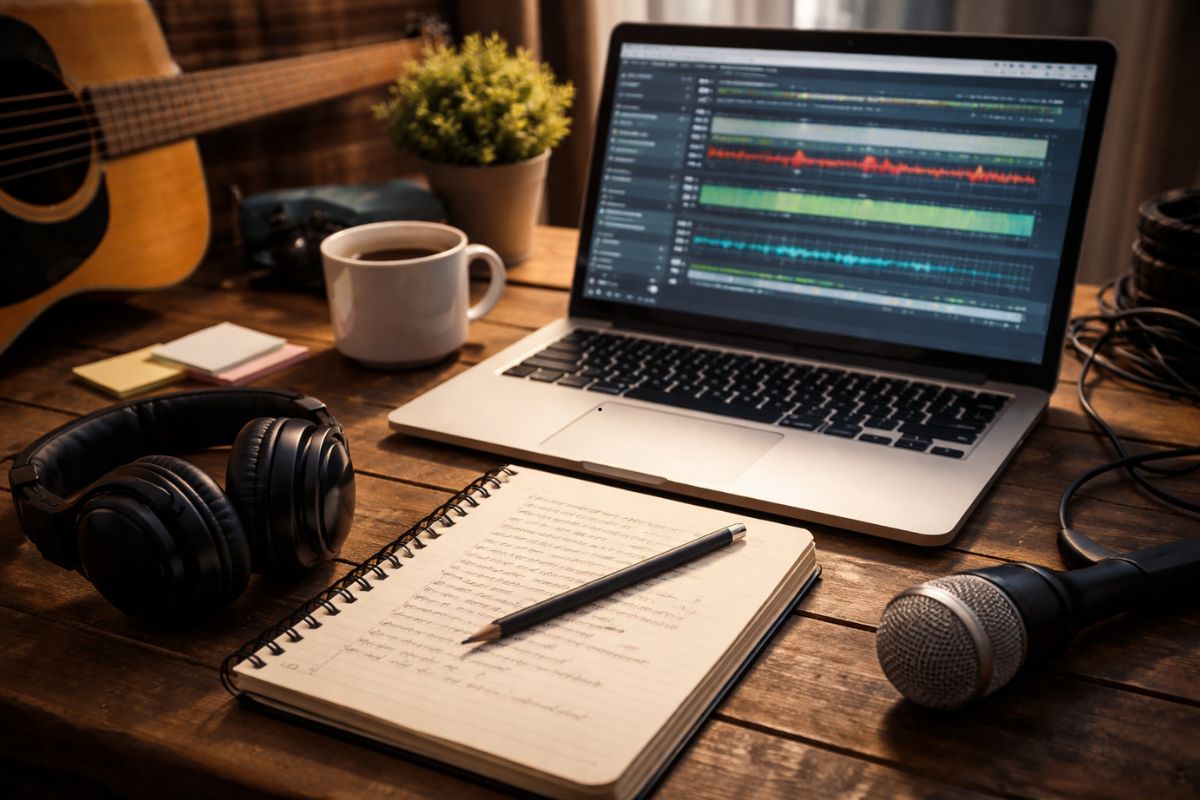
Great musical ideas rarely arrive while sitting quietly in front of a keyboard. They appear during rehearsals, while walking home, or in the middle of recording a demo track. Many Linux musicians capture these spontaneous moments by humming melodies, speaking rough lyric lines, or recording vocal sketches directly into their system. Those raw vocal ideas contain creative gold, yet they often remain buried inside audio files that are difficult to organize or search later.
Turning those recordings into written lyrics changes the creative workflow dramatically. Once spoken ideas become text, musicians can edit phrasing, rearrange lines, refine rhyme schemes, and track song structure more easily. Modern transcription tools make this process fast and surprisingly accurate. With the ability to convert voice memo to text, Linux artists can transform quick vocal notes into editable lyric drafts within minutes, creating a smoother path from inspiration to finished song.
This workflow fits perfectly into the open source music ecosystem. Linux producers already rely on flexible tools for recording, mixing, and synthesis. Adding transcription into the process simply extends that creative pipeline. Spoken thoughts become structured notes. Melodic fragments evolve into full verses. Recording sessions turn into written references for future editing.
Quick Summary
- Vocal sketches often contain the earliest form of lyric ideas.
- Transcribing recordings allows musicians to edit and organize lyrics quickly.
- Speech to text tools help capture spontaneous ideas during rehearsals or production sessions.
- Written transcripts support songwriting, documentation, and collaboration.
- Linux musicians can integrate transcription easily alongside their existing recording tools.
Why Vocal Recording Is Often the First Step in Songwriting
Songwriters rarely begin with perfect sentences. The first version of a lyric usually appears as fragments spoken aloud while experimenting with rhythm or melody. Musicians instinctively test how words feel inside a melody before writing them down. Recording these moments prevents valuable ideas from disappearing.
Many Linux artists already capture these drafts while producing tracks. During sessions built around software such as Ardour or LMMS, vocal sketches may be recorded quickly between instrumental takes. A producer experimenting with rhythm may speak possible lines over a drum loop, testing phrasing before committing to a final vocal performance. Musicians interested in deeper recording workflows often refine these techniques while studying recording vocals best practices that help capture clean audio for both music and spoken notes.
These voice recordings accumulate quickly. A single project folder might contain dozens of spoken drafts, melodic fragments, or improvised lines. Without transcription, reviewing those ideas later becomes slow. Musicians must replay recordings repeatedly just to locate specific phrases. Converting them into text allows every line to become searchable and editable.
From Spoken Inspiration to Structured Lyrics
Speech based songwriting follows a simple but powerful sequence. Musicians record ideas freely first, then refine them later. This separation encourages creativity because artists are not distracted by formatting or spelling during the early stages.
Once those recordings become text, a new stage begins. Lines can be rearranged. Verses can be expanded. Rhythmic flow becomes easier to analyze. Instead of scrolling through audio clips, writers can scan the lyrics visually and experiment with structure.
The approach aligns closely with traditional songwriting practices. Many artists historically dictated lyrics into tape recorders or portable devices before editing them later. Modern speech recognition systems simply accelerate that same process using artificial intelligence. A helpful explanation of how machines interpret spoken language can be found in the speech recognition technology guide, which describes how audio signals are analyzed and converted into structured text.
Benefits of Turning Vocal Notes Into Text
Converting audio ideas into written form creates several advantages for Linux musicians. These benefits extend beyond songwriting alone. Written transcripts improve organization across an entire music production workflow.
Below are some practical advantages musicians experience once they adopt this method.
- Lyrics become searchable within project folders or note systems.
- Draft verses can be copied directly into songwriting documents.
- Producers can quickly review creative ideas without replaying audio.
- Collaborators can read lyric drafts without downloading recordings.
- Song structures become easier to visualize and revise.
How Linux Musicians Can Build a Transcription Workflow
Integrating transcription into a Linux music studio requires only a few simple steps. The goal is not to replace existing recording tools. Instead, transcription complements the production environment musicians already use.
The process usually follows a simple pattern.
1. Record spontaneous ideas using a microphone, portable recorder, or phone voice memo.
2. Export or upload the recording into a speech to text tool that generates a transcript.
3. Review the transcript and clean up phrasing or spelling where needed.
4. Move the text into your lyric document or project notes for editing and arrangement.
5. Refine rhythm, rhyme patterns, and emotional tone while aligning lyrics with the music.
This method works well during both early songwriting stages and full recording sessions. Artists often speak ideas between takes. Those spoken thoughts become written references later when editing the track.
Combining Transcription With Linux Music Production Tools
Linux musicians often rely on a diverse toolkit for production. Digital audio workstations, plugin hosts, and MIDI systems all work together to create finished tracks. Transcription adds another helpful layer to this environment.
Consider a typical workflow inside Ardour. A musician records instrumental layers first. While experimenting with melody lines, the artist hums potential lyrics into a microphone. Those recordings remain stored alongside the project session. Later, the spoken ideas are transcribed and organized into lyric drafts.
Artists who use modular plugin environments may also record vocal notes while testing new synth sounds or rhythmic structures. Many producers working with modular plugin setups refine these techniques while learning about hosts such as Carla plugin host setup, which helps integrate instruments and effects inside a flexible Linux studio environment.
By transcribing vocal sketches, musicians can link creative ideas directly to specific production sessions. Lyrics remain connected to the moment they were inspired.
Example Workflow Table for Songwriters
| Stage | Action | Creative Benefit |
|---|---|---|
| Idea Capture | Record vocal thoughts or melodic lines | Preserves spontaneous creativity |
| Transcription | Convert spoken recordings into text | Creates editable lyric drafts |
| Editing | Refine rhyme, structure, and tone | Improves lyrical clarity |
| Integration | Align lyrics with DAW sessions | Strengthens song structure |
| Collaboration | Share transcripts with collaborators | Speeds up feedback and revisions |
Capturing Creative Moments During Recording Sessions
Recording environments often spark unexpected lyrical ideas. A guitarist testing chord progressions might suddenly speak a phrase that fits the mood of the track. A producer adjusting drum timing may improvise rhythmic vocal lines that later become a chorus hook.
If those moments remain trapped in audio files, they can easily disappear among hundreds of recordings. Transcription allows musicians to document those flashes of inspiration clearly. Each spoken phrase becomes part of a searchable creative archive.
This archive becomes particularly useful for artists who write multiple songs simultaneously. Producers may revisit old sessions months later. Written transcripts help them rediscover lines that were forgotten but still hold emotional impact.
Helping Collaborators Understand Song Concepts
Songwriting often involves collaboration. Vocalists, producers, and instrumentalists exchange ideas during rehearsals and studio sessions. Spoken brainstorming can be difficult to document. Conversations move quickly and recordings may contain overlapping dialogue.
Transcripts provide clarity. Each lyric idea appears in text form, making it easier for collaborators to discuss changes. A producer might highlight specific lines that match the rhythm of the track. A vocalist might rewrite phrasing to fit vocal range or tone.
Written lyrics also simplify remote collaboration. Linux musicians frequently work with artists across different locations. Sending a transcript allows collaborators to understand the song concept instantly without listening through long recordings.
Organizing Lyric Drafts for Long Term Projects
Musicians who release albums or EP collections often manage dozens of song ideas at once. Some remain unfinished for months. Others evolve through many versions before reaching the final mix.
Transcribed lyrics help maintain organization across these long term projects. Writers can group drafts by theme, mood, or musical style. This method turns scattered voice notes into a structured songwriting library.
The ability to review past lyrics quickly can also spark new ideas. A phrase recorded during one project might fit perfectly inside another song years later. Text archives allow musicians to rediscover these hidden creative fragments without scanning endless audio files.
Turning Raw Thoughts Into Finished Songs
Music production often blends emotion with technology. Linux musicians appreciate tools that support creativity without restricting it. Transcription fits naturally within this philosophy. Spoken ideas remain spontaneous, yet written transcripts provide structure for refining them.
By turning vocal sketches into text, musicians bridge the gap between inspiration and songwriting craft. Each lyric begins as a fleeting thought. With the help of speech to text tools, that thought becomes a tangible draft ready for editing and arrangement.
For artists working inside Linux based studios, this approach strengthens the entire creative workflow. Recording sessions capture inspiration. Transcription preserves it. Careful editing shapes those ideas into songs that listeners can connect with deeply.
The result is a songwriting process that feels fluid, organized, and endlessly creative. Ideas no longer vanish after the moment passes. They remain visible on the page, ready to grow into music that lasts.